
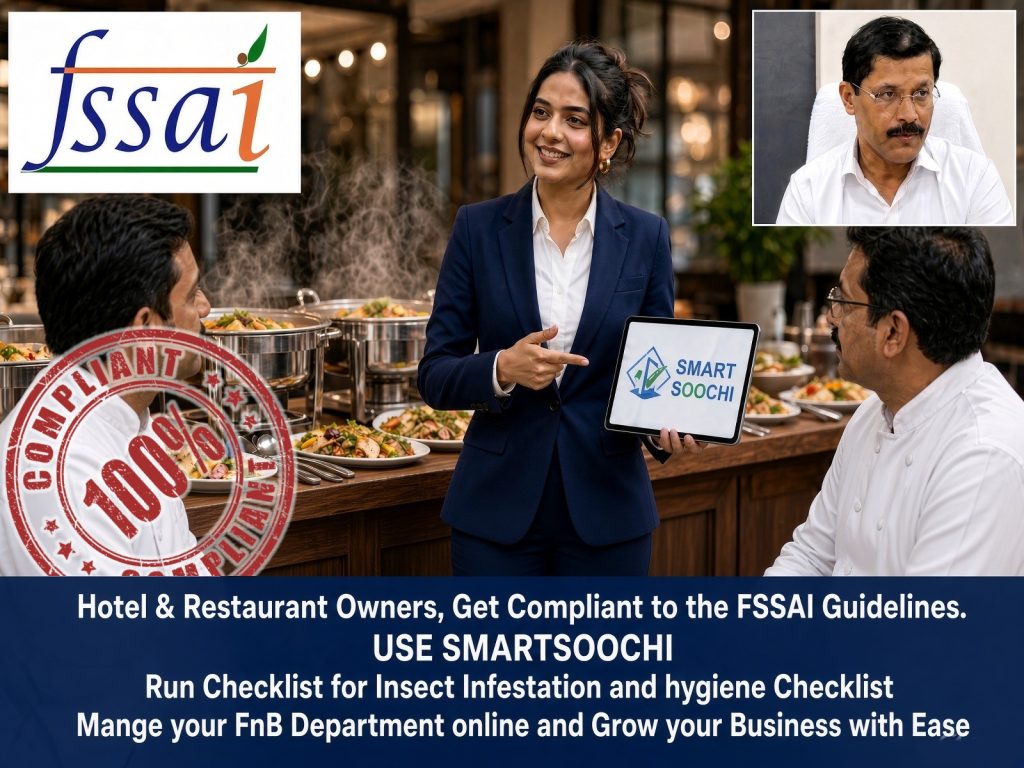
Food inspectors walk in without notice. They check kitchens, stores, drains, and cold rooms. They look for pests, expired food, dirty equipment, and missing records.
Paper logs do not help in that moment. Chat photos get lost. A verbal “all clean” is not evidence.
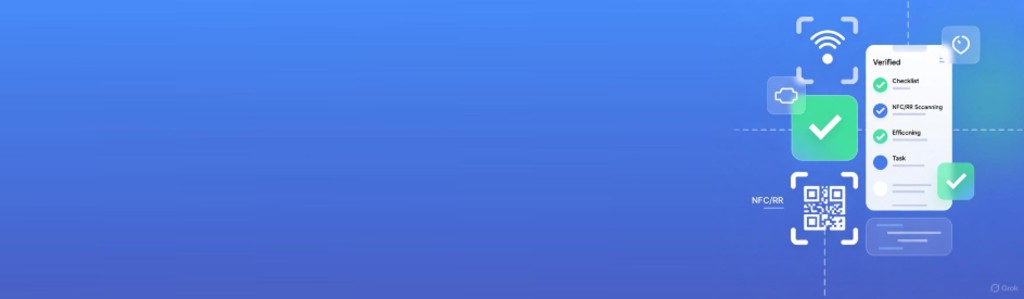
SmartSoochi turns daily work into digital checklists. Staff complete tasks on a mobile app. Every check is time-stamped, geo-tagged, and photo-verified. Managers see gaps at once. When an FSSAI or FDA team arrives, you show a trail not a panic.
Why hotels and restaurants need this now
Recent raids have shut outlets for basic lapses. The pattern is the same across cities.
- Cockroaches in stores and prep areas
- Clogged drains and standing water
- Uncovered or expired food
- Cold rooms above safe temperature
- Staff without medical or training records
- Assets with no service history
Most of these failures are preventable. They happen when checks are irregular or undocumented.
SmartSoochi assigns the work. It captures proof. It escalates misses. It keeps history for every outlet.
1. Checking hygiene
Hygiene is not a monthly audit. It is a shift habit.
Use SmartSoochi to run the same hygiene checklist every service. Build one SOP. Assign it by role, shift, and zone.
Cover the areas inspectors always touch:
- Kitchen floors, walls, and ceilings
- Handwash points, soap, and towels
- Boards, knives, and food-contact surfaces
- Dishwash and pot-wash areas
- Refrigerators, freezers, and display units
- Waste bins, lids, and drainage
- Staff uniforms, gloves, and hairnets
- Restrooms and service counters
This is how the check runs on the floor.
- Staff scan a QR code at the location.
- They tick each point on the phone.
- They upload a photo where proof is needed.
- AI can flag weak or repeated images.
- A missed item goes to the supervisor.
- The dashboard shows a live hygiene score.
You get one standard across kitchens. You get proof of work. You fix issues before a guest or inspector finds them.
The app works offline in basements and cold rooms. Data syncs when the signal returns.
2. Checking insect infestation
Pests close licences faster than almost any other finding. Inspectors look for live insects, droppings, gaps, and weak pest-control records.
SmartSoochi makes infestation checks daily and visible. Do not wait for the monthly vendor visit.
Set zone-wise pest checklists for high-risk spots:
- Dry stores and grain bins
- Cold rooms and freezers
- Dishwash and grease-trap corners
- Floor drains and wall-floor junctions
- Staff lockers
- Garbage rooms
- Receiving bays and door gaps
Staff record what they see, not what they hope.
- Live insects: yes or no
- Droppings, smear marks, or nests
- Gaps in doors, windows, and pipe sleeves
- Bait stations: present, dated, intact
- Last pest-control visit and next due date
- Photo of the hotspot
- Action taken on the spot
Then the system follows through.
- A “pest found” tick can open a work order.
- Housekeeping or the vendor gets the task.
- Closure needs a photo.
- Repeat findings show on the dashboard.
- You see which store or kitchen fails most often.
Infestation stays on the screen. It does not hide in a notebook until raid day.
3. Managing F&B operations
F&B breaks when receiving, storage, prep, and service do not talk to each other. SmartSoochi links them as a sequence of checklists.
Receiving
- Capture supplier, invoice, and batch details.
- Log temperature of chilled and frozen goods.
- Note damaged packing.
- Photograph rejected stock.
- Block items that fail the check.
Stores
- Enforce FIFO and FEFO.
- Keep veg and non-veg separate.
- Store allergens apart.
- Keep chemicals away from food.
- Cover every container.
- Record unit temperatures each shift.
Kitchen and service
- Separate raw and cooked work.
- Log probe readings.
- Check hot-holding and buffet temperatures.
- Record oil changes.
- Control tasting and leftovers.
- Run a close-down checklist before lights off.
People and statutory records
- Track food-handler medical certificates.
- Log training completion.
- Store water-test dates.
- Keep lab-sample history ready.
Managers stop chasing ten groups on chat. They open one control view.
- What is pending this shift
- Which outlet is red
- Which task keeps failing
- Who completed the check, and when
F&B becomes measurable. It no longer depends on one chef’s memory.
4. Maintaining assets
A dirty kitchen is often a broken kitchen. A failed freezer creates both hygiene risk and pest risk.
SmartSoochi Asset Maintenance puts equipment on a schedule. Tag each asset with a QR code.
Start with the machines that protect food safety:
- Walk-in cold rooms
- Deep freezers and display chillers
- Dishwashers and water filters
- Exhaust and fresh-air units
- Grease traps
- Ovens, combis, and bain-maries
- Fly killers and bait devices
Then automate the care.
- Set preventive jobs by OEM cycle or running hours.
- Give operators a daily checklist on the machine.
- Scan QR. Open history. Complete the SOP.
- Log temperature, noise, leaks, or error codes.
- Raise a ticket with a photo.
- Track downtime, repair time, and repeat faults.
This protects the F&B floor in simple ways.
- Cold chain stays in range.
- Breakdowns get caught early.
- Vendors become accountable.
- Inspectors see service history, not excuses.
Link every asset to a space. A fridge belongs to “Main Kitchen, Cold Room 2.” Hygiene, pest, and maintenance data then sit together.
How the four parts work as one system
Do not treat these as four separate tools. One miss should trigger the next check.
| Area | Daily action | What you see |
|---|---|---|
| Hygiene | Shift checklists and photos | Cleanliness score |
| Infestation | Zone pest checks and bait logs | Early pest alerts |
| F&B | Receiving, store, and kitchen SOPs | Process control |
| Assets | QR-based PM and breakdown tickets | Working equipment |
Here is a typical chain.
A freezer temperature check fails. That opens an asset ticket. The same alert flags a food-safety risk. Store staff run an extra hygiene and pest check on that room. The manager sees the full chain on one dashboard.
That is inspection readiness. Not extra work the night before a raid.
How to start
You do not need a long IT project.
- Map kitchen, store, receiving, and service zones.
- Put QR codes on rooms and key assets.
- Build four starter checklists: hygiene, pest, F&B close, and asset daily.
- Assign them to roles and shifts.
- Train staff on the mobile app.
- Review the first week of data.
- Tighten the items that fail most often.
Begin with one outlet. Copy the same SOPs to the next.
The point
Inspectors look for two things. A clean operation. And proof that it stays clean when nobody is watching.
SmartSoochi gives both.
Short checklists. Verified photos. Live scores. A full history of hygiene, infestation control, F&B tasks, and asset care.
Use it every shift. Keep kitchens and stores infestation-free. Keep equipment working. Stay FSSAI-compliant and keep the doors open.
Ready to digitise your F&B floor?
Visit www.smartsoochi.com and book a demo for your hotel or restaurant.